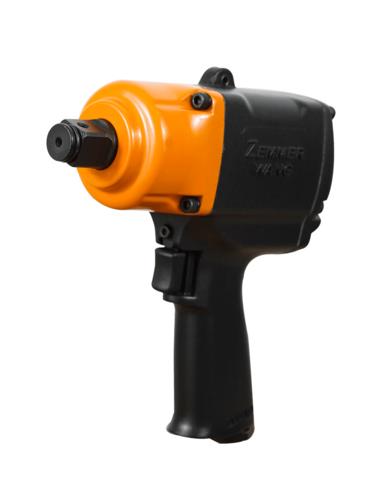
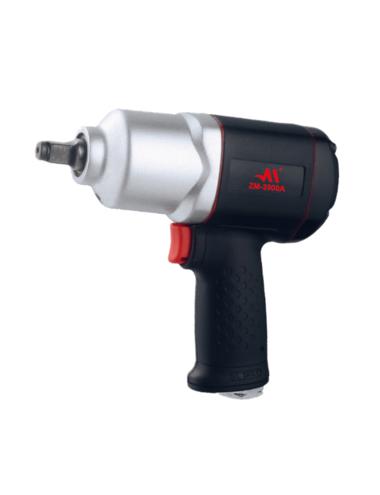
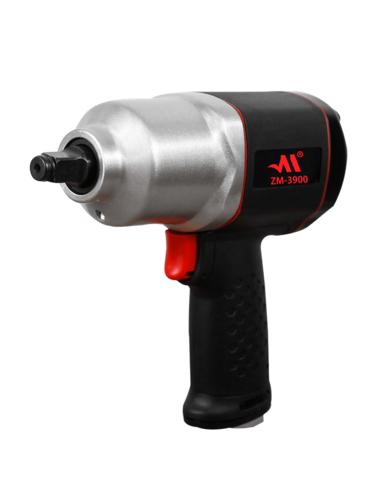
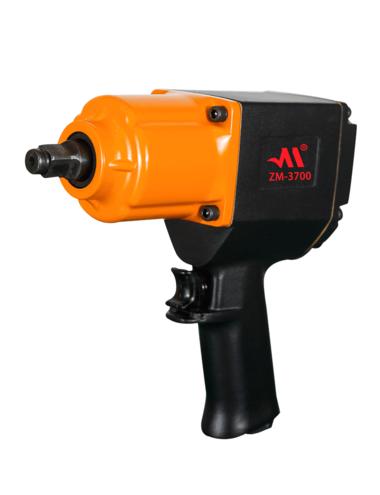
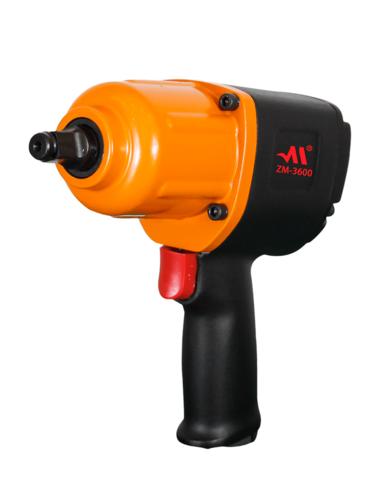
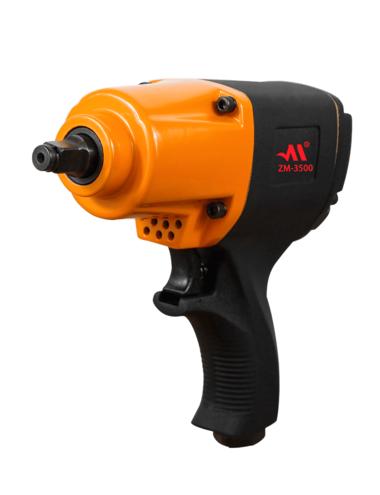
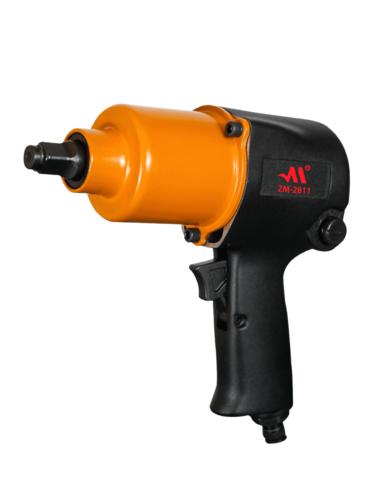
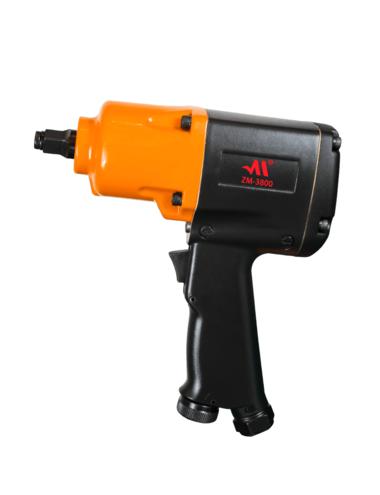
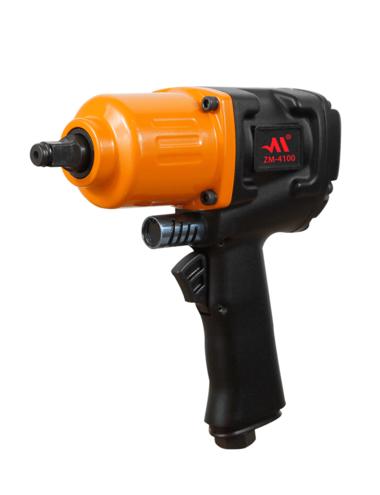
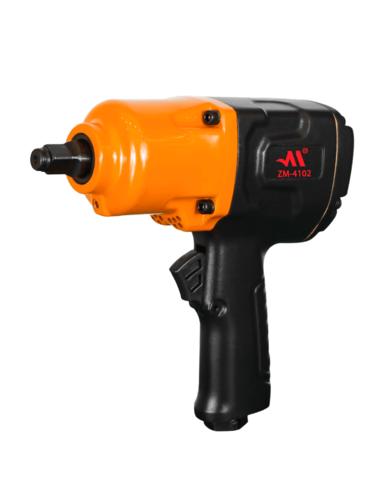
A technician breaking loose a corroded lug nut on a loaded truck axle needs something different from what a technician spinning small fasteners on a car engine bay needs, and a 1 Inch Car Repair Wrench built around a rocking dog clutch mechanism is sized for the truck axle job, not the engine bay one. The rocking dog design delivers one heavy, deliberate blow per rotation rather than the rapid double strikes a twin-hammer mechanism produces, and that difference shows up directly in how the tool feels breaking loose a bolt that has not moved in years.
A twin-hammer mechanism strikes the anvil twice per rotation with two smaller hammers, producing a smoother, higher-frequency impact pattern well suited to fasteners that spin free once they start moving. A rocking dog clutch pivots a single hammer against the anvil once per rotation instead, concentrating more force into each individual blow. That single heavier strike is what lets a 1 Inch Car Repair Wrench built this way work through the kind of corrosion and thread damage common on big truck and lorry hardware, where a lighter, faster hammer pattern would stall out against the same fastener rather than break it free. The trade-off runs the other direction on lighter work: a rocking dog mechanism feels blunter and less controllable on smaller bolts where a twin-hammer tool's finer touch actually helps.
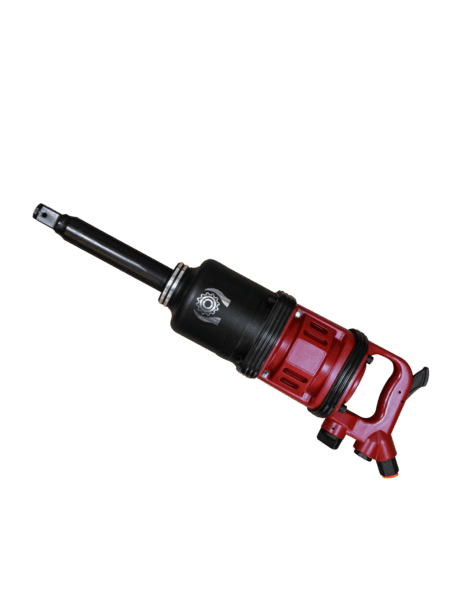
A spec sheet listing 4180 N.m of max torque tells a buyer almost nothing about how the tool performs during a normal loosening or tightening cycle, because that figure is a breakaway rating rather than a sustained working value. The applied torsion range on this model family runs from roughly 1300 N.m up to the low 3000s or high 3000s depending on which of the three variants is specified, and that working range is what actually determines whether the tool matches a given bolt spec on a daily job. Comparing three models purely by max torque, without checking where each one's applied torsion range starts and ends, leads a buyer toward a tool rated for far more force than the fasteners on hand actually require.
Running at 8 to 12 kg/cm² of air pressure, this size of tool draws somewhere around three-quarters of a cubic meter of air per minute, a figure that matters far more in a multi-bay shop than it does on a spec sheet read in isolation. A compressor sized for one 1 Inch Car Repair Wrench running alone can fall short the moment a second air tool comes online in an adjacent bay, and the symptom is not an obvious failure but a gradual pressure drop that quietly costs torque without an operator noticing right away. Sizing compressor capacity against the total simultaneous draw of every air tool likely to run at once, rather than against a single tool's rated consumption, keeps this kind of intermittent torque loss from showing up as an intermittent, hard-to-diagnose complaint from the service bay.
None of these three details show up on a headline spec comparison built around peak torque and weight. A 1 Inch Car Repair Wrench matched to actual fastener condition, working torque range, and compressor capacity performs closer to its rated numbers on the shop floor than one selected on the strength of the largest torque figure on the page.
Zhengmao is an export enterprise specializing in the production, service and development of pneumatic tools.
 English
 中文简体
中文简体 Deutsch
 Español
 Français
 русский
 عربى
عربى