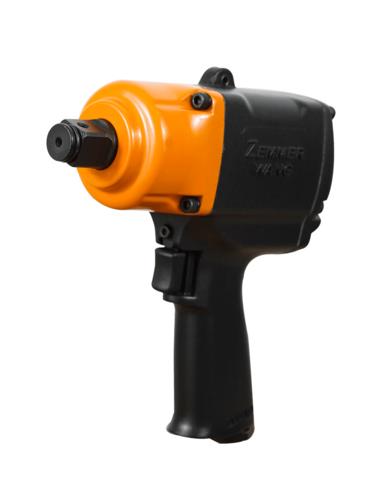
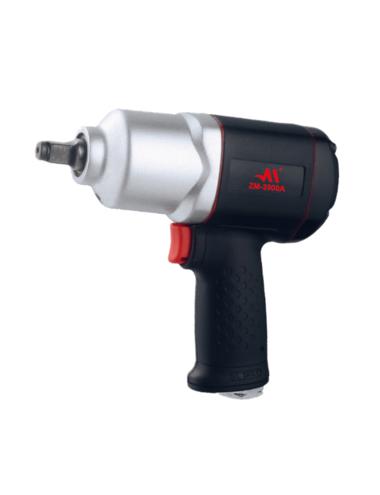
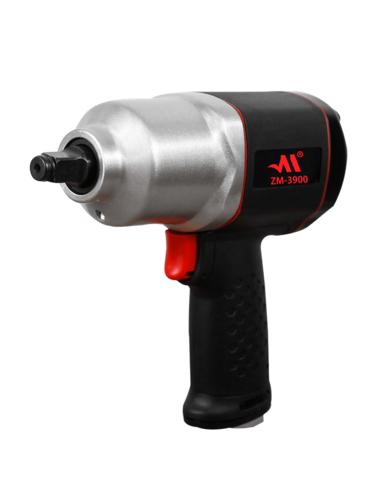
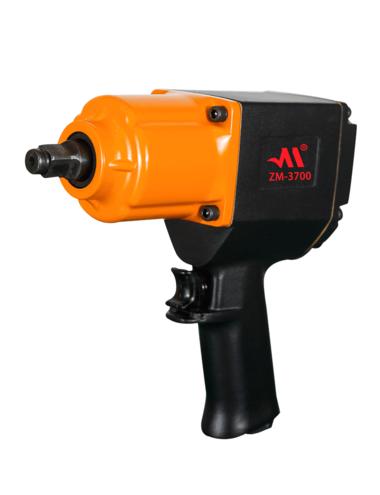
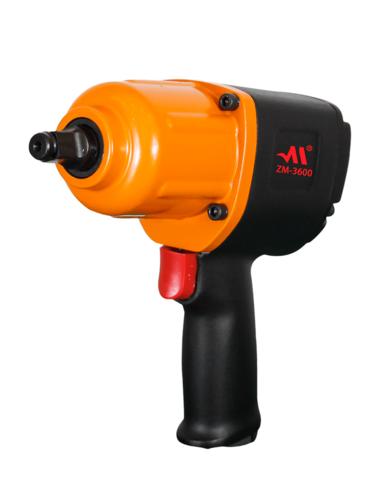
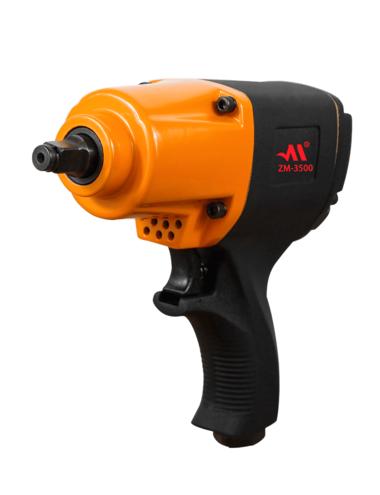
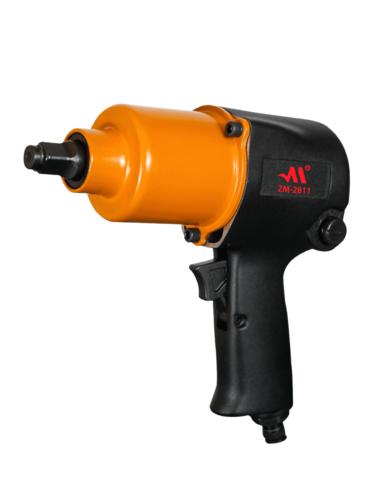
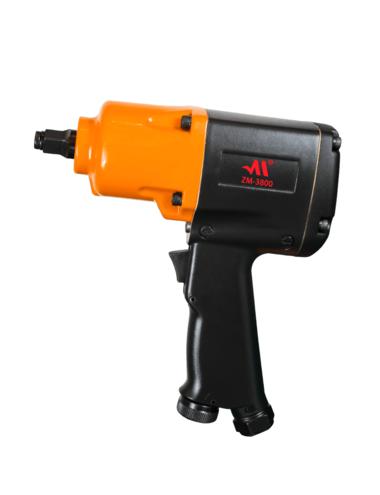
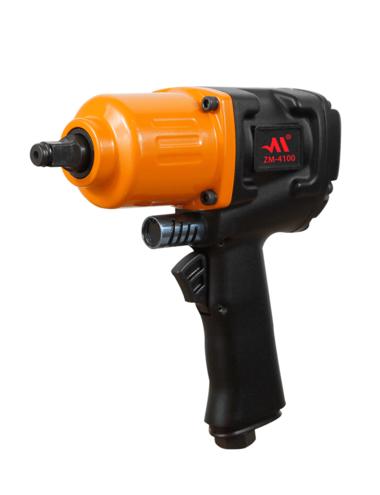
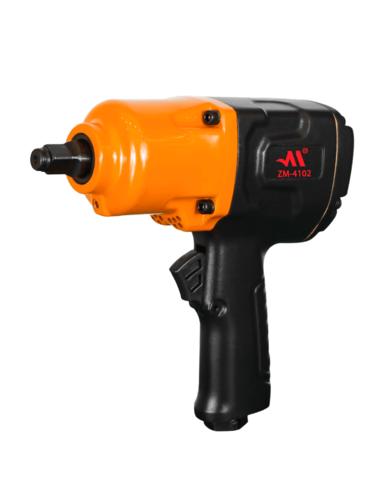
Exhaust routing rarely gets attention until a technician notices oil mist collecting near a work light, or a compressed air line starts pushing moisture back toward a hose fitting. Inside an Air Impact Wrench Pneumatic housing, the exhaust path determines where spent air and residual oil exit the tool, and that routing choice affects comfort, visibility, and cleanup during a full shift of use.
Manufacturers building compressed air tools generally choose between three exhaust configurations: handle exhaust, front exhaust, and rear exhaust. Handle exhaust routes spent air down through the grip and out near the operator's hand, which keeps the airflow away from the workpiece but can direct warm, oil-laced air across the wrist during extended use. Front exhaust pushes air out near the anvil, useful in open bays but less practical under a vehicle where the discharge can stir dust directly into the technician's line of sight. Rear exhaust, common on longer-bodied Air Impact Wrench Pneumatic models, sends air backward away from both the work area and the operator's hand, a layout that factory engineers favor for enclosed or overhead work.
The rotor vanes inside the motor housing sit directly in the exhaust path, and their material affects how consistently a tool performs over its service life. Vanes made from reinforced composite resist the fine oil residue that accumulates in poorly filtered air lines, while lower-grade materials can swell or chip when exposed to contaminated air over time. Suppliers producing compressed air tools at scale test vane batches against accelerated wear cycles before releasing a motor assembly for production, since inconsistent vane thickness changes how evenly torque builds during each hammer strike.
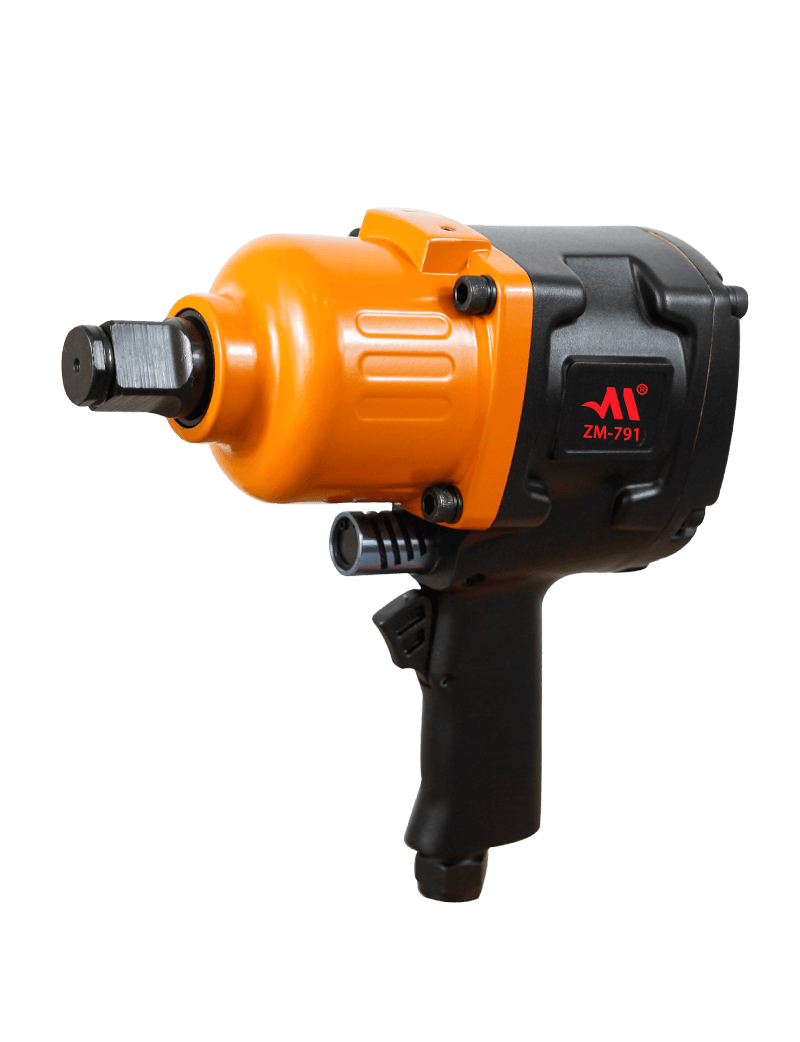
A reverse valve sitting near the trigger controls whether the Air Impact Wrench Pneumatic rotates forward or backward, and the tolerances machined into that valve body affect how quickly the tool responds when a technician flips direction mid-task. Loose tolerances create a delay between the trigger action and rotor response, which technicians notice when working through a long run of lug nuts where direction changes repeatedly. Tighter valve machining reduces that lag but raises manufacturing cost, a tradeoff factories weigh differently depending on whether a model targets professional shops or general maintenance buyers.
Composite and aluminum housings dissipate the heat generated during sustained operation differently, and buyers evaluating compressed air tools for continuous-use environments often ask about several details before placing an order:
Aluminum housings conduct heat away from the rotor faster but transfer more of that heat to the operator's hand, which is one reason many Air Impact Wrench Pneumatic models use a composite outer shell over a metal motor casing rather than an all-metal build.
Technicians servicing an Air Impact Wrench Pneumatic unit rely on access points built into the housing design, particularly around the rotor chamber and hammer case. Tools designed with a removable rear cap allow lubrication and vane inspection without disassembling the entire motor, a detail that shortens routine maintenance time in shops running several units through daily rotation. Fewer fasteners around the access panel generally correlate with faster field servicing, though factories balance that against the sealing requirements needed to keep contaminants out of the compressed air tools internals between service intervals. Oiling frequency recommendations vary by manufacturer, and technicians who follow the specified interval typically report more consistent torque output across the tool's working life than those who extend intervals to reduce downtime.
Zhengmao is an export enterprise specializing in the production, service and development of pneumatic tools.
 English
 中文简体
中文简体 Deutsch
 Español
 Français
 русский
 عربى
عربى