Car washing equipment has become increasingly varied as professional detailing, service stations, rental fleets, and home maintenance create different cleaning requirements. In this market, pressure remains an obvious performance indicator, but it is no longer the only factor shaping equipment development. Pump efficiency, water delivery, operating stability, and compatibility with different washing accessories are receiving greater attention.
The High Pressure Car Washer sits within this shift. Its cleaning performance depends heavily on the pump system behind the spray gun, making pump construction an important part of how modern washing equipment is developed.
High-pressure water can remove mud, road dust, and other deposits from vehicle surfaces more effectively than a conventional hose. However, simply increasing pressure does not automatically create a better washing system.
The relationship between pressure and water flow affects how the equipment performs during actual cleaning. A narrow jet with high pressure can target stubborn dirt, while a larger flow can help rinse loosened contaminants from larger areas. Equipment manufacturers therefore need to match the pump with the intended cleaning application rather than treating pressure as an isolated specification.
This has become particularly relevant for the High Pressure Car Washer, which may be used for everything from routine vehicle washing to heavier cleaning around wheels, chassis components, and commercial vehicles.
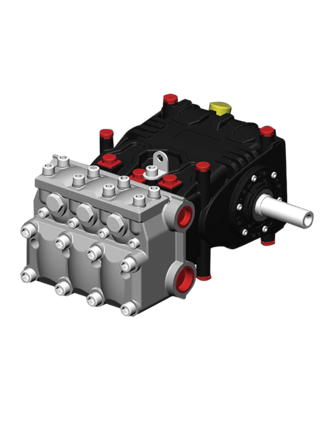
The pump is one of the central components in a high-pressure washing system. It converts the motor's mechanical power into pressurized water, so its internal structure directly influences operating stability.
Materials, sealing components, valves, and surface finishing all have a role in pump performance. Repeated pressure cycles can place stress on internal components, especially when equipment is used frequently or for extended periods.
Manufacturing high-pressure pumps therefore involves more than producing a housing and assembling moving parts. Dimensional accuracy between components is important because small inconsistencies can affect sealing, vibration, water delivery, or service life.
At Zhejiang Zhenming Tools Co., Ltd., high-pressure pump production is positioned within its broader washer and washer-pump product range. This type of manufacturing connects pump development with the practical requirements of pressure washing equipment rather than treating the pump as an independent mechanical component.
The market for High Pressure Car Washer equipment covers a wide range of applications. A homeowner washing a passenger vehicle may prioritize compact equipment and easy handling, while a detailing shop may place greater emphasis on repeated operation and consistent water delivery.
Commercial users can have another set of requirements. Fleet operators, service centers, and vehicle cleaning facilities may run equipment for longer periods, increasing the importance of thermal management, pump durability, and stable output.
These differences are encouraging manufacturers to develop washing systems around specific operating conditions. A pump intended for occasional household cleaning does not necessarily need the same configuration as one designed for frequent professional use.
Another development in pressure washing is the wider use of interchangeable accessories. Spray guns, extension lances, foam systems, hose connections, and different nozzle types allow one washing unit to handle several cleaning tasks.
For a High Pressure Car Washer, compatibility between the pump and these components can affect the user's actual experience. The pump needs to provide suitable pressure and flow while maintaining stable operation as accessories change.
Foam application is one example. A foam lance uses the water stream to mix detergent and create a layer that helps loosen surface contamination before rinsing. This has made pressure washing equipment more versatile, particularly in vehicle detailing where washing is increasingly treated as a multi-stage process.
As washing equipment becomes more specialized, pump manufacturing is also moving toward tighter process control. Casting or machining creates the basic pump components, followed by surface treatment, sealing assembly, and performance testing.
Testing can identify problems with pressure output, leakage, abnormal vibration, or inconsistent water delivery before the pump enters a finished washer. For manufacturers supplying different markets, repeatable production is particularly important because washing equipment may be exposed to different water conditions, operating frequencies, and environmental temperatures.
The continuing development of the High Pressure Car Washer therefore involves more than producing stronger spray pressure. Pump efficiency, component durability, water flow, accessory compatibility, and manufacturing consistency are becoming closely connected parts of the equipment itself.
As vehicle cleaning moves toward more specialized equipment for household, detailing, and commercial applications, the pump remains one of the areas where mechanical engineering has the greatest influence on the final washing system.
Zhengmao is an export enterprise specializing in the production, service and development of pneumatic tools.
 English
 中文简体
中文简体 Deutsch
 Español
 Français
 русский
 عربى
عربى