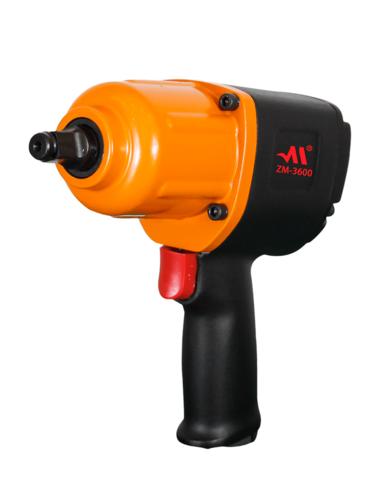
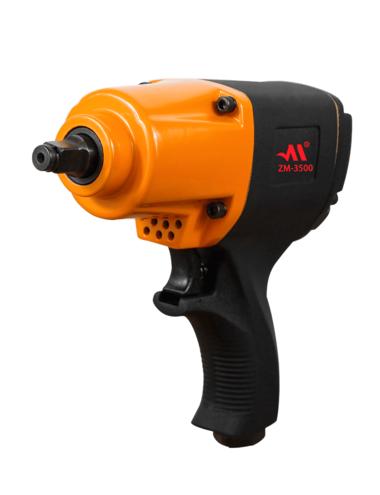
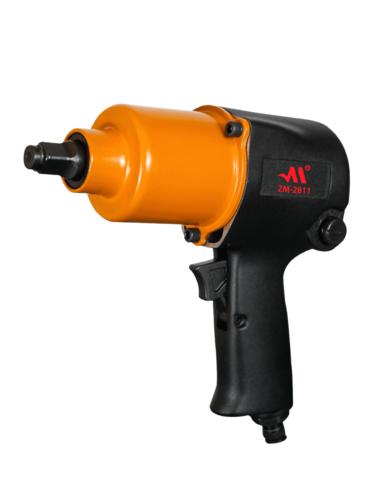
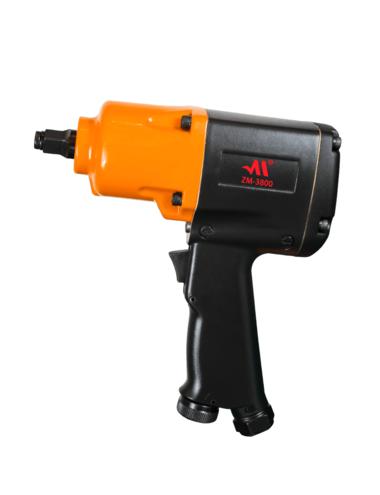
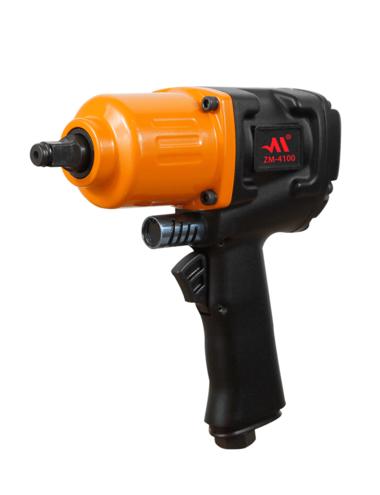
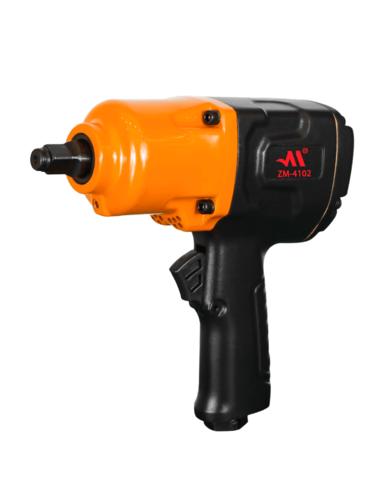
People shopping for pneumatic impact tools often discover something confusing fairly quickly. The term 1/2 inch air impact gun is widely used across workshops, repair garages, and industrial maintenance environments, yet it is only one size within a much larger category.
Different drive sizes exist because fastening tasks vary considerably. Removing wheel nuts from a passenger vehicle requires different torque characteristics than working on heavy equipment or small mechanical assemblies. As a result, the market contains several common impact gun sizes, each serving a different role.
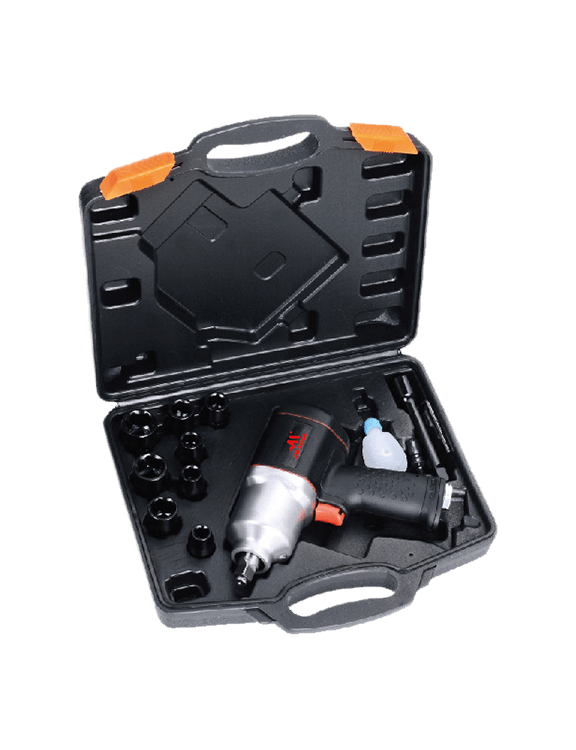
When discussing a 1/2 inch air impact gun, the size refers to the square drive that connects the tool to the socket.
The drive size influences the type of socket used, the typical torque range, and the applications the tool is commonly associated with.
In daily workshop environments, technicians rarely choose a tool based solely on power. The size of the fastener often determines which impact gun is taken from the tool cabinet.
That is why multiple sizes continue to coexist rather than one replacing the others.
Among pneumatic impact tools, 1/4-inch and 3/8-inch drive models are often found in lighter-duty environments.
Typical applications include:
Although these tools may appear similar to a 1/2 inch air impact gun, they are generally intended for different tasks and smaller fasteners.
Their compact size often makes them easier to handle in confined working areas.
The 1/2 inch air impact gun occupies a middle position that suits a broad range of industries.
It is frequently seen in:
Many technicians become familiar with a 1/2 inch air impact gun early in their careers because it covers a large percentage of everyday fastening jobs.
This versatility helps explain why the size remains common despite the availability of both smaller and larger alternatives.
As fastening requirements increase, larger drive sizes become more common.
Heavy-duty industries may use:
|
Drive Size |
Typical Applications |
|
1/4 inch |
Small assemblies |
|
3/8 inch |
Light maintenance |
|
1/2 inch |
Automotive and general repair |
|
3/4 inch |
Commercial vehicle work |
|
1 inch |
Heavy equipment maintenance |
A 1/2 inch air impact gun may be suitable for many workshop tasks, but larger equipment often requires tools designed for higher torque demands.
This is especially true in industries involving trucks, construction machinery, and industrial equipment.
In practice, technicians rarely ask which impact gun is universally better.
Instead, they consider questions such as:
Because of these factors, a 1/2 inch air impact gun is often selected alongside other sizes rather than replacing them completely.
Many professional workshops maintain multiple drive sizes to cover a wider range of repair situations.
A common misunderstanding is that a larger impact gun automatically represents an upgrade.
In reality, a tool that is too large can be just as inconvenient as one that is too small.
For example, a 1/2 inch air impact gun may be more practical for routine automotive service than a heavier 1-inch model. On the other hand, large industrial fasteners may exceed the intended working range of a standard 1/2 inch air impact gun.
The appropriate choice usually depends on the work environment rather than a simple comparison of torque figures.
Despite the availability of many alternatives, the 1/2 inch air impact gun continues to occupy an important position in pneumatic tool markets.
Its combination of manageable size, broad compatibility, and suitability for common repair tasks has helped it remain relevant across numerous industries. While smaller and larger models continue to serve their own purposes, the 1/2-inch category often sits at the center of everyday maintenance and repair work, making it one of the sizes technicians encounter frequently.
Zhengmao is an export enterprise specializing in the production, service and development of pneumatic tools.
 English
 中文简体
中文简体 Deutsch
 Español
 Français
 русский
 عربى
عربى