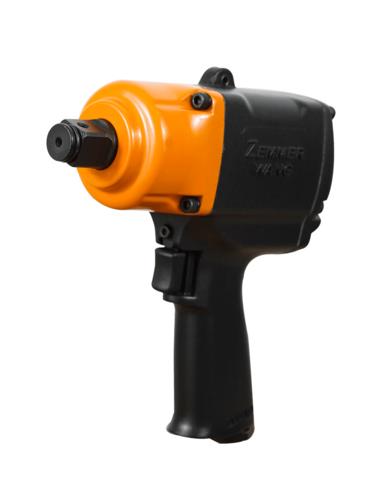
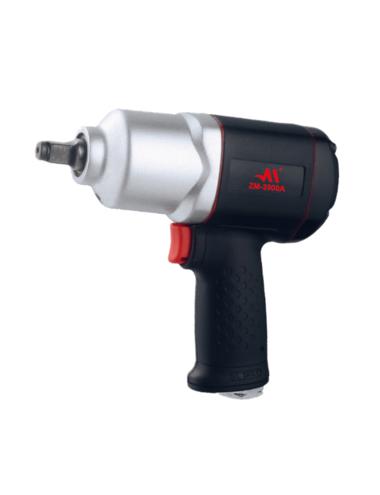
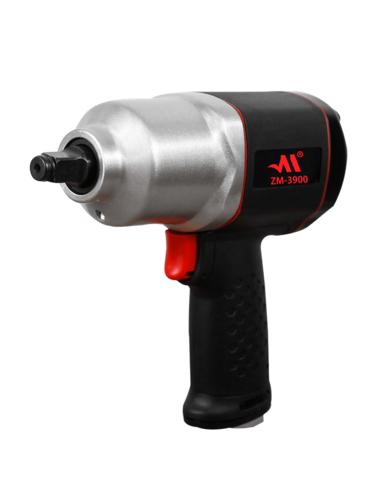
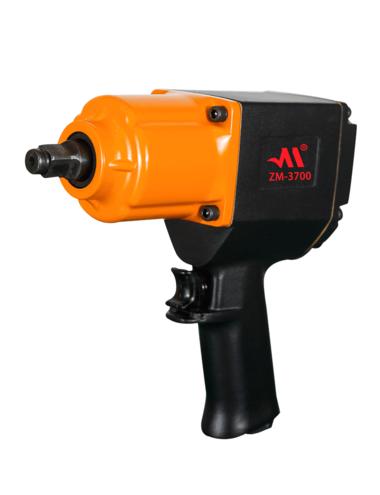
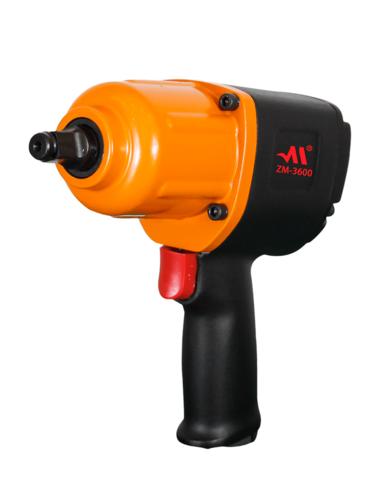
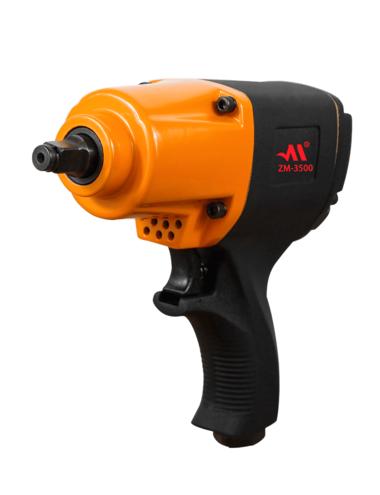
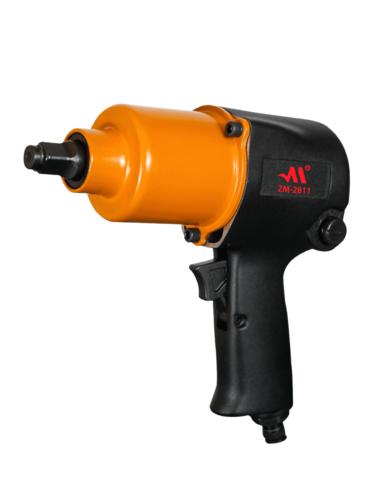
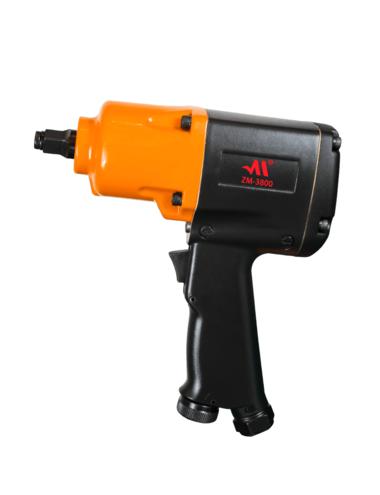
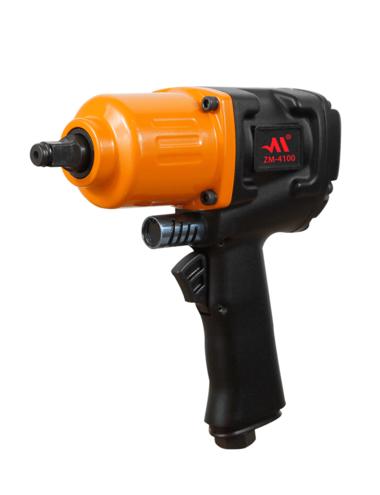
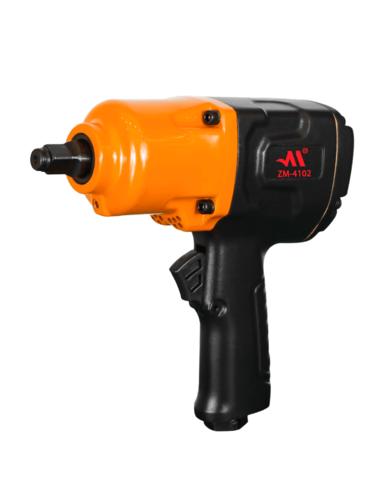
Two impact wrenches can share the same torque rating on paper and still feel completely different in the hand, and the difference usually traces back to how the internal hammer mechanism delivers that torque rather than the number itself. A 3/4 air impact wrench built around a twin hammer mechanism spreads impact force across two striking points instead of one, which changes both how the tool feels during use and how long its internal components hold up. Buyers who shop by torque number alone often end up disappointed with a tool that technically meets spec but wears out faster or feels rougher in daily hands-on use than a comparable 3/4 air impact wrench built with a different internal mechanism.
A twin hammer mechanism inside a 3/4 air impact wrench strikes the anvil from two points during each rotation rather than one, which reduces the peak force each individual strike delivers while maintaining comparable overall torque output. This distribution tends to produce smoother operation and less vibration transmitted back to the operator's hand compared to single hammer designs, which matters directly for technicians using the tool across full working shifts rather than occasional short bursts. Buyers comparing wrenches with identical torque ratings should ask specifically about hammer mechanism type, since this detail affects daily usability more than the torque number alone suggests.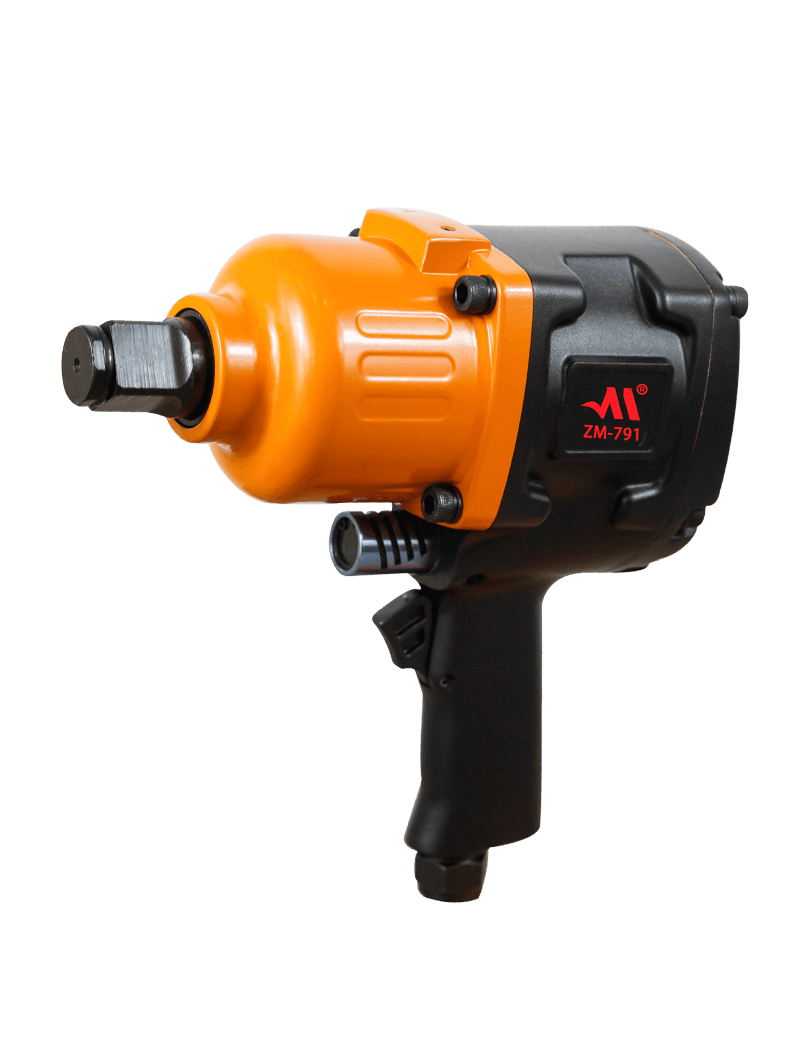
Housing construction method affects how well a 3/4 air impact wrench survives repeated drops and impacts common in shop and field environments, and a directionally smelted housing produces a denser, more uniform metal structure than standard casting methods typically achieve. This translates to a housing that resists cracking under impact while remaining light enough to handle comfortably during extended use, a combination that matters more in this weight class than in smaller tools where housing stress is naturally lower.
An adjustable power regulator on a 3/4 air impact wrench lets the operator dial back output for delicate fastener work without switching to a smaller tool entirely, then dial back up for stubborn, rusted, or over-torqued bolts that need the tool's full rated force. This flexibility matters specifically for shops handling varied repair work rather than a single repetitive task, since a fixed-output tool forces technicians to either risk over-torquing delicate fasteners or keep a second smaller tool on hand for lighter jobs.
A 3/4 air impact wrench in this class typically handles bolt capacity in the 32mm range while drawing air consumption proportional to its torque output, and buyers should size their compressor system to sustain this draw during continuous use rather than just peak demand. Undersizing the air supply is one of the more common reasons a well-built tool underperforms its rated specifications in the field, since the tool cannot deliver output the compressor cannot supply regardless of how the internal mechanism is engineered.
|
Factor |
Twin Hammer Mechanism |
Single Hammer Mechanism |
|
Vibration felt by operator |
Lower, force spread across two strikes |
Higher, concentrated single strike |
|
Suited for |
Extended shifts, repeated daily use |
Occasional or lighter-duty use |
|
Mechanical complexity |
Higher, additional moving components |
Lower, simpler internal structure |
|
Typical torque delivery |
Smoother, more consistent |
More abrupt per strike |
|
Common application |
General repair on cars, tires, heavy equipment |
Lighter automotive and DIY tasks |
Repair shops handling a mix of tire changes, general automotive service, and occasional heavy equipment work benefit from a 3/4 air impact wrench with an adjustable regulator more than shops running a single repetitive task all day, since the flexibility to scale output up or down reduces the number of separate tools a technician needs to reach for during a typical shift. Buyers should map their actual daily fastener range, from delicate trim bolts to seized lug nuts, against the tool's adjustable output range before finalizing a purchase, rather than sizing solely around the single job the shop occasionally handles.
Zhengmao is an export enterprise specializing in the production, service and development of pneumatic tools.
 English
 中文简体
中文简体 Deutsch
 Español
 Français
 русский
 عربى
عربى